
Journaling is an easy way to document your life, think through ideas, and be more creative. Here’s how to start a journal.

Disclosure: This blog contains affiliate links. As an Amazon Associate and member of other affiliate programs, Keri Houchin earns a commission from qualifying purchases at no additional cost to you.
When I was a kid, I had a diary with a lock. I’ve always loved writing and drawing, but even if you don’t, you can start a journal.
The most important thing is that there are no rules. If you look at pictures on social media, you’ll find all kinds of journal styles from simple to fancy.
You can just write with a pen on paper or use a bullet journal. Or you can type on a computer. You can draw or use stickers or just write words.
There are no grammar or spelling rules, so you can write in sentences or not. And since this is just for you, don’t worry about whether your handwriting is pretty or not.
My own journaling habit has changed a lot over time, even over the past few years. Here’s where I recommend you start.
1. Decide why you want to journal.
The reason you are starting a journal will help you decide most of the other elements.
- self-awareness, mental health, and clarity
- organizing, productivity, and goals
- creative writing, art, and gratitude
If you’re writing a traditional diary-type journal, you might want a solid lined notebook with a hardcover. For writing and drawing together, you might prefer a notebook that includes different types of paper or is blank. And a grid journal is good for making lots of lists and organizing.
Popular types of journals
Here are a few specific types of journals. Once you’ve started one, you might be motivated to create a few different ones!
- diary – regular entries that tell the story of your daily life
- bullet journal – a quick, no-frills log of lists
- dream journal – a short description of what you dreamed and possibly your other sleep habits
- event journal – entries about a specific event, like a wedding or pregnancy
- gratitude journal – a list or sentence a day about what you’re grateful for
- food/fitness journal – entries about what you ate or how you exercised each day

2. Gather your journal supplies.
All you need is a good pen and notebook, but of course, that can be a simple or fancy as you like.
- lined or grid notebook
- colored pens
- washi tape, stickers, and other planner supplies
Printable journal pages
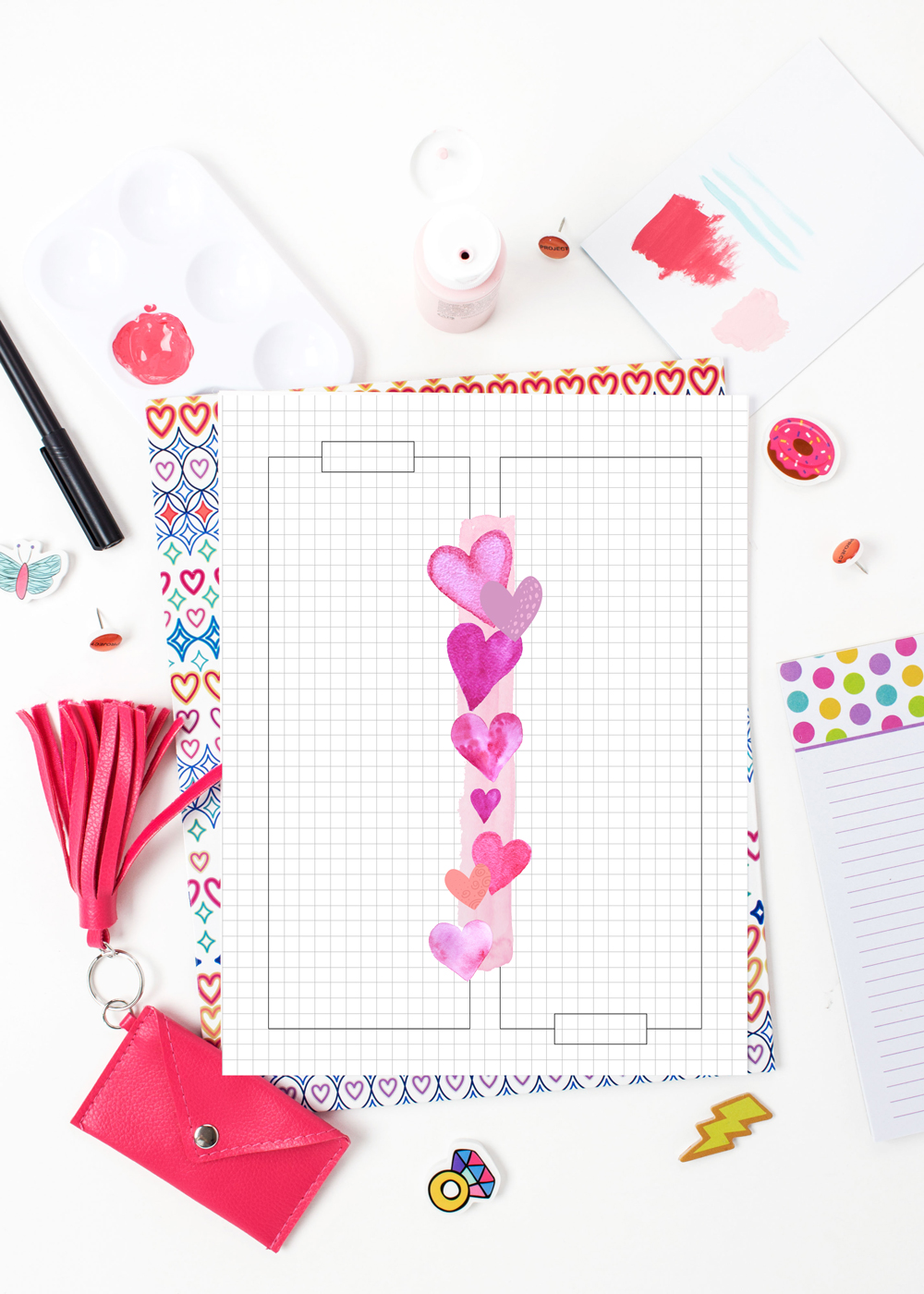
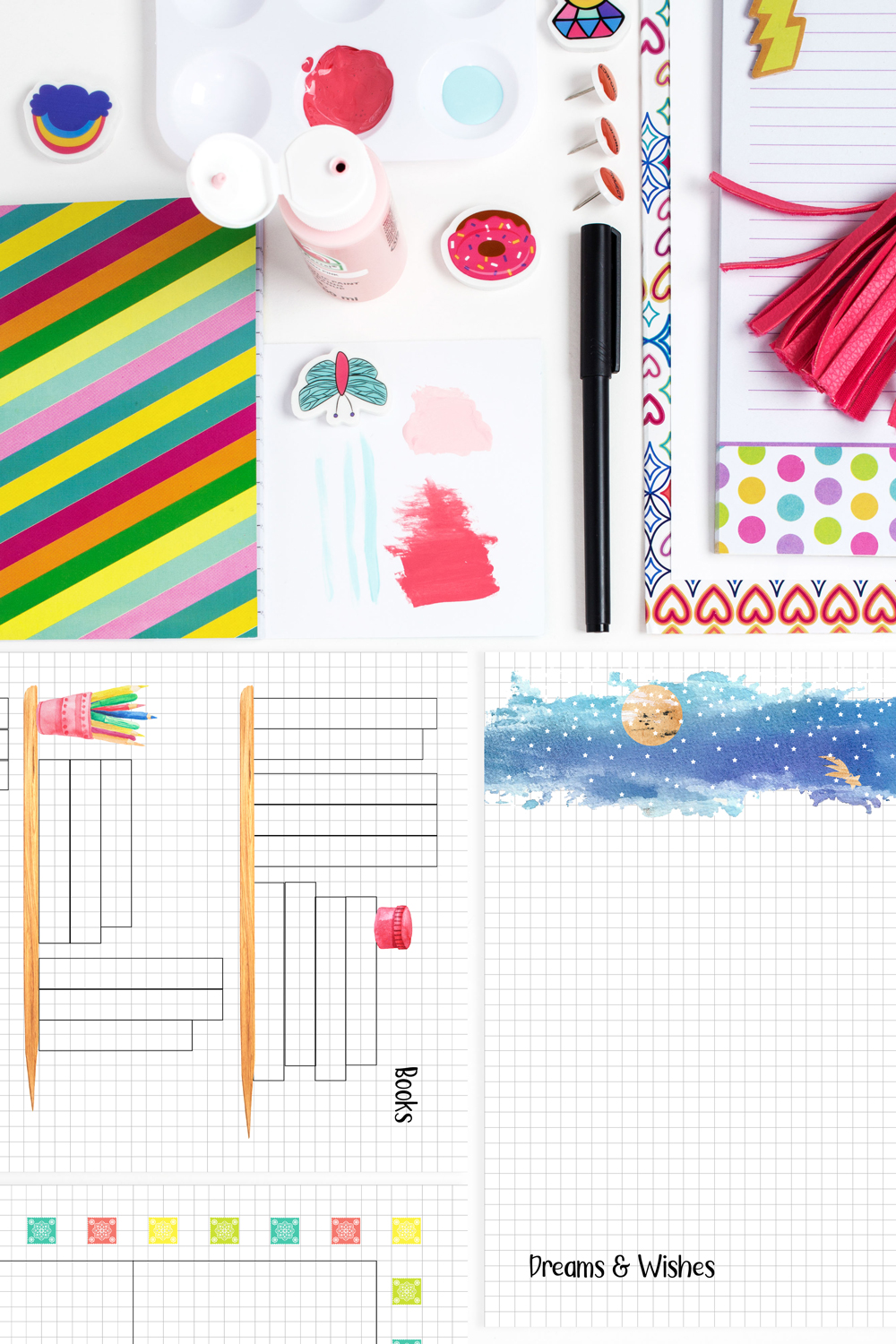
I’ve designed a series of monthly journal pages that are a great starting point if you want a little guidance. There’s one for each month that includes watercolor illustrations, writing prompts, planner pages, and blank page layouts.
3. Choose a place and time.
The secret to making writing in your journal a habit is to find a good place to sit and do it on a regular schedule. I sit at my office desk in my living room, but write wherever you’re comfortable.
You may want to write for a few minutes each day or pick one day a week. The important part is to be consistent until it becomes a habit. I started with 5 minutes on weekday mornings but didn’t worry if I skipped a day.
Even if you miss a few days, you can always start again. It may be helpful to tie journaling to another habit you have, like drinking your morning coffee or right before you go to bed at night.
4. Write!
You can start by simply opening to the first page, writing the date at the top, and writing. Don’t over-think it too much. Write as though you’re talking to yourself and just let your thoughts flow. Don’t stress about self-editing or writing details in the “correct” order.
It may be helpful to leave a few blank pages at the front for a table of contents. Skip the first five pages and then start numbering your pages in one corner. As you write, add the page numbers to the blank pages at the beginning with a list of the contents.
Writing prompts
If you have trouble thinking of something to write about, here are a few open-ended ideas to get you started.
- What did you do yesterday?
- What is your favorite book/movie/animal/etc. and why?
- Tell a story about a meaningful moment or a childhood memory.
- Write about your parents, siblings, and other family members.
- Where is one place you’d love to visit someday?
- What would your life be like if one thing was different?
- Tell a story about a funny moment.
- What are your goals for this year? For the next five years?
- What makes you happy?
- Who do you love to spend time with?
5. Don’t be afraid to change.
Once you’ve started a journal and gotten into a habit, don’t be afraid to change it up. Your journal can change as often as you do.
Your schedule might change, or you might go through a season where you need to write things down more – or less. If you feel like adding some doodles, go for it!
Ultimately, a journal is a personal thing and the best way to start is just that – to start!

What’s next? Try these other fun and creative ideas on One Mama’s Daily Drama:
Leave a Reply